Droopy nasal tip correction: Why simple stitching fails.Learn about Nasal Tip Ptosis correction. A structural approach using Septal Extension Grafts for a stable, natural lift and improved breathing.

Table of Contents
For the specific group of patients who come to see me about a “droopy nose“, the consultation has a very familiar rhythm. The main complaint is almost always about their profile: “Doctor, my nose tip droops down.” This is immediately followed by the detail that frustrates them the most: “And it gets so much worse when I smile.”
What they’re describing is what we medically call “nasal tip ptosis“, or a droopy tip. What I see, as a surgeon, isn’t a problem of excess skin. It’s a failure of the support system underneath the skin. That framework simply can’t hold the tip up. This lack of support makes the face look older, or more severe, and throws the entire facial harmony out of balance.
Patients are frustrated because this “plunging” look defines their nose. The great news is that this is one of the most correctable and rewarding issues we address in modern rhinoplasty.
My approach to droopy nose surgery isn’t just to “lift” the tip it’s to rebuild its internal support system for a natural, stable, and permanent result.
Why Do I Have a Droopy Nose Tip?
When a patient with a droopy tip comes to me, my brain immediately runs a diagnostic checklist. I’m examining their underlying anatomy. In my experience, the cause is almost always one of the following:
- Weak Tip Cartilages: This is the most common reason. The “scaffolding” of your nasal tip what we call the lower lateral cartilages is simply too weak, soft, or “floppy” to hold its own shape against the weight of the skin. It just doesn’t have the structural integrity to stay up.
- An Overly Long Septum (Tension Nose): This is incredibly common. The central wall of your nose (the septum) is literally too long at its lower edge. This excess length physically pushes the nasal tip down and forward, creating a “tension nose” appearance.
- The “Smiling Problem”: This is the “it droops when I smile” complaint. A small muscle (the depressor septi nasi) runs from your upper lip to the base of your nose. In some people, this muscle is overactive. When you smile, it contracts and aggressively pulls the entire tip structure down.
- Previous Surgery or Aging: Sometimes, a tip can begin to droop years after a previous rhinoplasty if adequate long-term support wasn’t created. Likewise, as we all age, the supportive ligaments in the nose weaken, and things start to succumb to gravity.
The Problem: More Than Just Aesthetics
The concern over a droopy nose tip is usually twofold.
First, there’s the aesthetic concern. A plunging tip makes the nose look disproportionately long. It eliminates the clean, defined angle that should exist between the lip and the nose, often creating a “hooked” or “beak-like” profile.
Second, there is often a functional problem. A severely droopy nose tip can act like a curtain hanging over the nostrils. When you inhale, this “curtain” can be sucked inward, causing the airway to narrow or collapse. This is known as external nasal valve collapse, and it’s a primary cause of nasal obstruction. Many of my patients with droopy tips are chronic mouth-breathers.
The Solution: A Structural Approach to Droopy Nose Surgery (My Technique)
Fixing a droopy nose tip is not a “one-size-fits-all” procedure. The surgery must address the specific anatomical cause you have.
You cannot fix this long-term with a simple “tip-plasty.” Simply “stitching the tip up” is a flawed, old technique. It will fail. The tip is under constant tension from gravity and skin, and those stitches will eventually stretch or break.
My philosophy is to build a new, permanent support structure. I almost always perform this using an Open Rhinoplasty approach. This technique involves a small incision across the columella (the skin between the nostrils), which allows me to lift the skin and get direct, unobstructed visibility of your entire nasal framework. To rebuild a droopy tip, you must be able to see the full anatomy.
Here is my surgical process:
Step 1: Release the Tension (Addressing the Septum) If a long septum is pushing the tip down (a “tension nose”), the very first step is to release that pressure. I will surgically trim the excess length from the caudal (lower) border of the septum. You can often see the tip “relax” upward into a more natural position the moment this is done. This sets the stage for the rebuild.
Step 2: Build the New Foundation (The Septal Extension Graft) This is the most crucial step and the heart of modern tip surgery. We must create a new, strong pillar for the tip to rest on. We cannot rely on the patient’s existing weak cartilages.
To do this, I harvest a small, straight piece of the patient’s own cartilage. The best source is the septum itself (taken from an internal area where it won’t be missed). If the septum is gone from a prior surgery or is too weak, I will use rib cartilage, which provides excellent, rigid support.
This harvested cartilage is then fashioned into a Septal Extension Graft (SEG). This graft is securely attached to the end of the now-trimmed septum, acting as a rigid, internal “I-beam” or “tent pole” that extends down to precisely where we want the new tip to be.
Step 3: Set the New Tip Position (Suturing and Shaping) With the new, immovable SEG in place, I now have a powerful anchor. I bring the patient’s weak tip cartilages (the lower lateral cartilages) up to this graft and secure them with precise, permanent sutures.
This is not guesswork. This is structural engineering. This single step allows me to control the tip’s final position with millimeter accuracy. I am setting two things:
- Rotation: This is the “lift.” We are creating a more open, aesthetically pleasing angle (the nasolabial angle) between your lip and your nose.
- Projection: This is how far the nose sticks out from the face. The SEG ensures the tip has strength and definition and won’t collapse.
This graft is the long-term stability. The tip is now supported by a strong, internal cartilage frame, not flimsy stitches.
Step 4: Release the “Smiling Muscle” (The Depressor Septi Myotomy) Finally, if the patient has the classic complaint of a tip that plunges dramatically on smiling, I address the overactive muscle. I will identify the small depressi nasi muscle fibers at the base of the nose and perform a myotomy (a precise release or cut). This simple step ensures that your new, structurally-supported nasal tip stays in place and doesn’t get pulled down when you laugh or smile. It does not affect your ability to smile naturally.
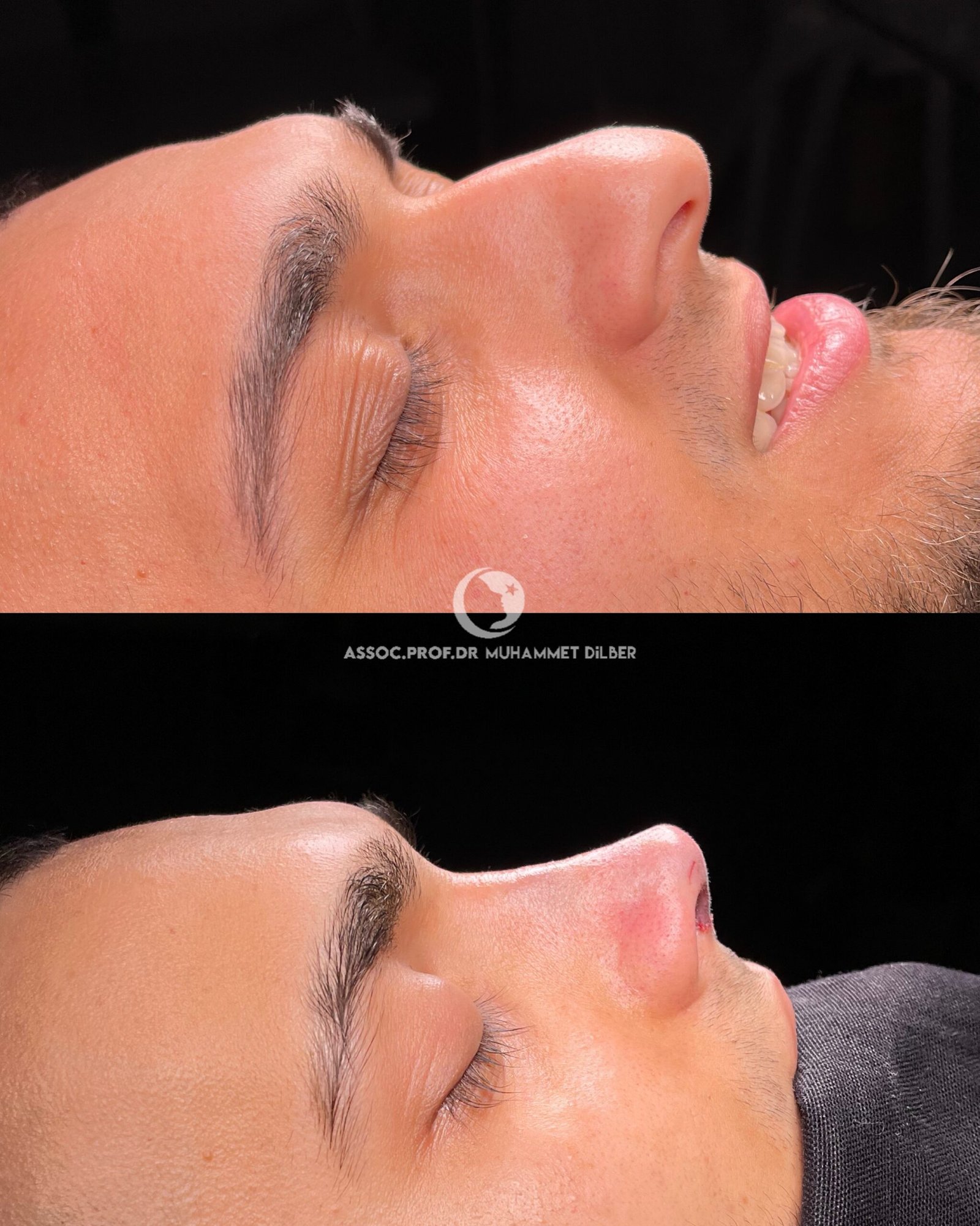
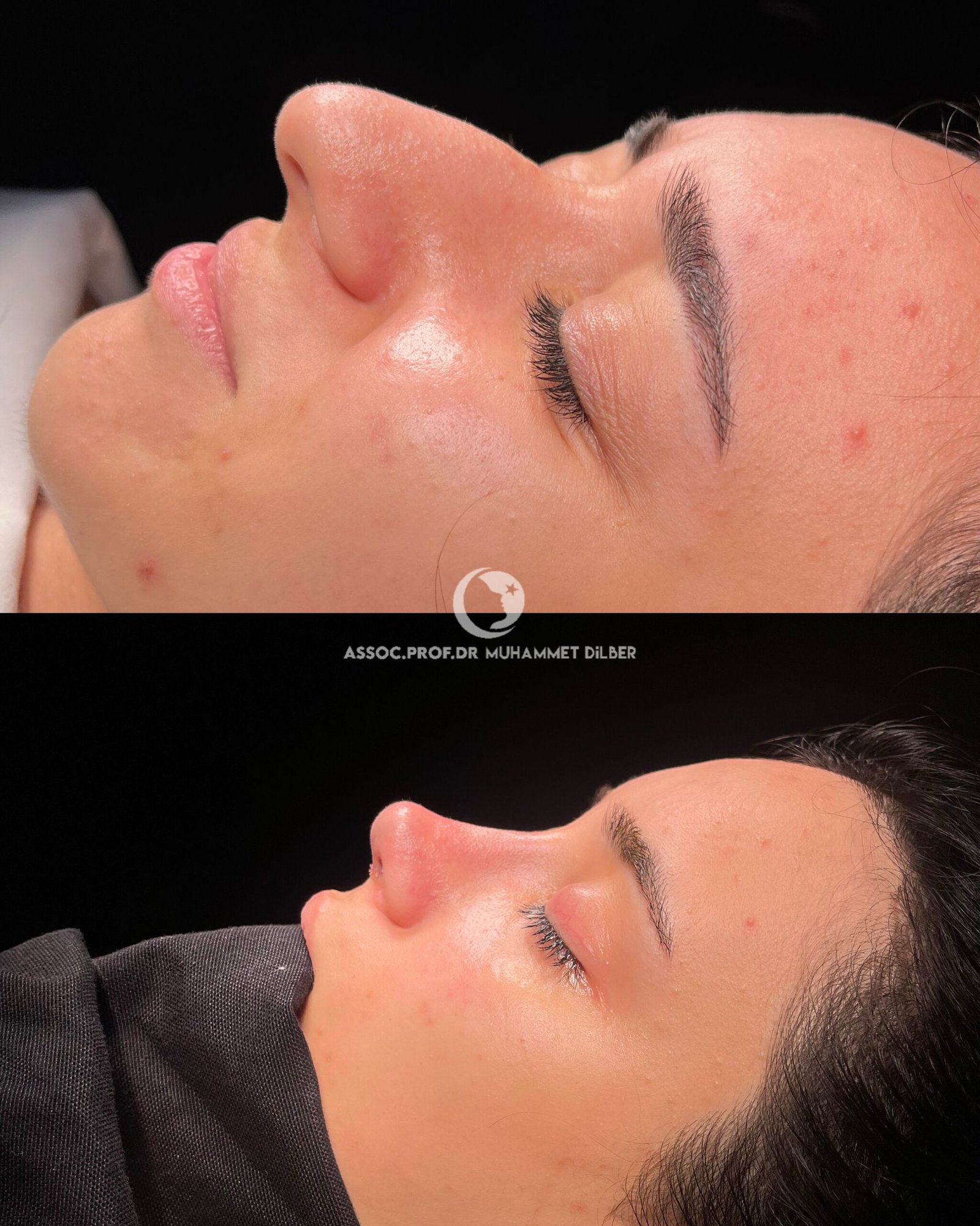
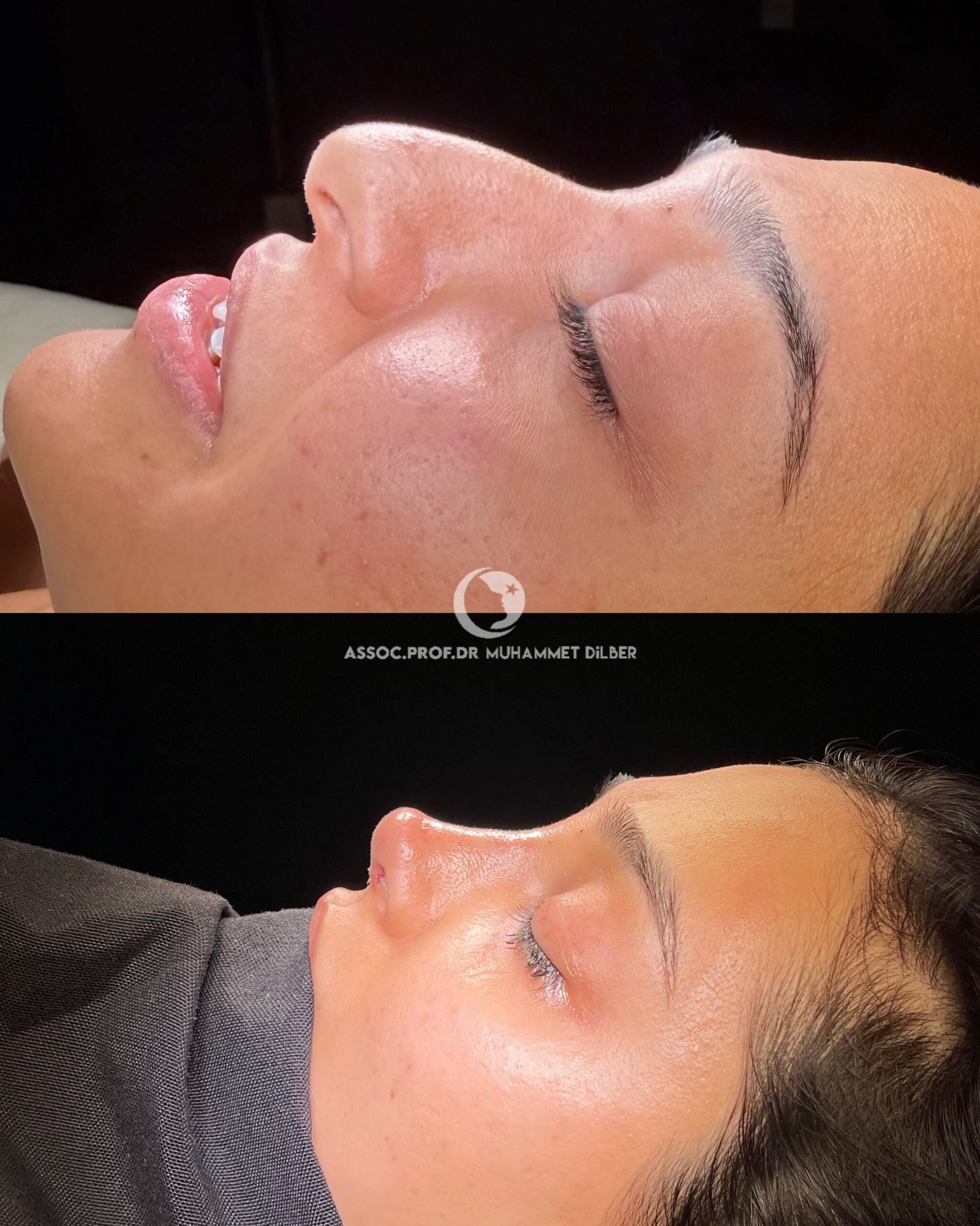
Recovery and Your Final Result
After your droopy nose surgery, you’ll have a splint for about a week. Once it’s removed, the new, lifted position of your tip will be immediately obvious.
While the primary swelling will subside over the first few weeks, the tip is the last part of the nose to fully settle. The final, refined definition will emerge over 6-12 months. However, the support is permanent from day one.
The result is transformative. We aren’t just lifting the nose; we are creating a balanced, harmonious profile that looks natural and belongs to your face. The nose will no longer be the first thing you see. And for many of my patients, the best result is functional: they can finally breathe freely through their nose.
If you are tired of a nasal tip that droops or feels heavy, I invite you to an online consultation.
Nasal Tip Ptosis (Droopy Tip) and Surgical Correction
How is “Nasal tip ptosis” defined clinically, and what is the underlying structural deficit?
Nasal tip ptosis is characterized by the downward displacement of the nasal tip profile. Clinical analysis indicates that this deformity is rarely a consequence of skin redundancy; rather, it results from the structural failure of the underlying subcutaneous framework. The cartilaginous support system is insufficient to maintain proper tip rotation against the weight of the skin envelope.
What are the primary etiological factors contributing to a drooping nasal tip?
The pathology typically stems from four specific anatomical causes:
- Weak Lower Lateral Cartilages: The intrinsic cartilages are structurally compromised or too pliable to support the tip shape.
- Elongated Septum (Tension Nose): Excessive length at the caudal border of the septum physically displaces the tip inferiorly.
- Hyperactive Depressor Septi Nasi: The muscle connecting the upper lip to the nasal base exerts excessive downward traction during facial animation (smiling).
- Ligamentous Laxity: Attenuation of the nasal suspensory ligaments due to aging or sequelae of prior surgical interventions.
Does nasal tip ptosis present functional implications beyond aesthetic concerns?
Yes. Beyond the disruption of facial harmony (such as an acute nasolabial angle), severe ptosis often compromises the external nasal valve. The plunging tip can obstruct the nostril aperture during inspiration, leading to dynamic airway collapse and chronic nasal obstruction.
Why is the “Septal Extension Graft” (SEG) considered the standard for correction in this technique?
The Septal Extension Graft functions as a rigid internal pillar or “I-beam.” Harvested from septal or costal (rib) cartilage, this graft is anchored to the existing septum to create a stable, immobile foundation. It allows the surgeon to secure the lower lateral cartilages at a precise degree of rotation and projection, ensuring long-term stability that native weak cartilages cannot provide.
Is simple suture suspension (“tip-plasty”) sufficient for long-term correction?
No. Techniques relying solely on suture fixation are prone to recurrence. The constant tension exerted by gravity and the skin envelope eventually compromises suture integrity. Permanent correction requires a structural reconstruction of the internal framework, typically performed via an Open Rhinoplasty approach to ensure complete visualization and graft placement.
How is dynamic ptosis (drooping upon smiling) surgically managed?
Dynamic ptosis is attributed to the contraction of the depressor septi nasi muscle. Surgical management involves a precise myotomy (transection/release) of these muscle fibers at the nasal base. This procedure eliminates the downward vector of pull during smiling, stabilizing the tip position without affecting the natural mechanics of the smile.
What is the expected timeline for postoperative recovery and final tip definition?
Immediate structural elevation is observed upon splint removal (approximately one week post-surgery). However, the nasal tip is the subunit most prone to prolonged edema. While primary swelling resolves in the initial weeks, the final refinement and detailed definition of the tip contour evolve over a period of 6 to 12 months.
Last Updated:Jan 1st, 2026